
What Is Mixed Hearing Loss?
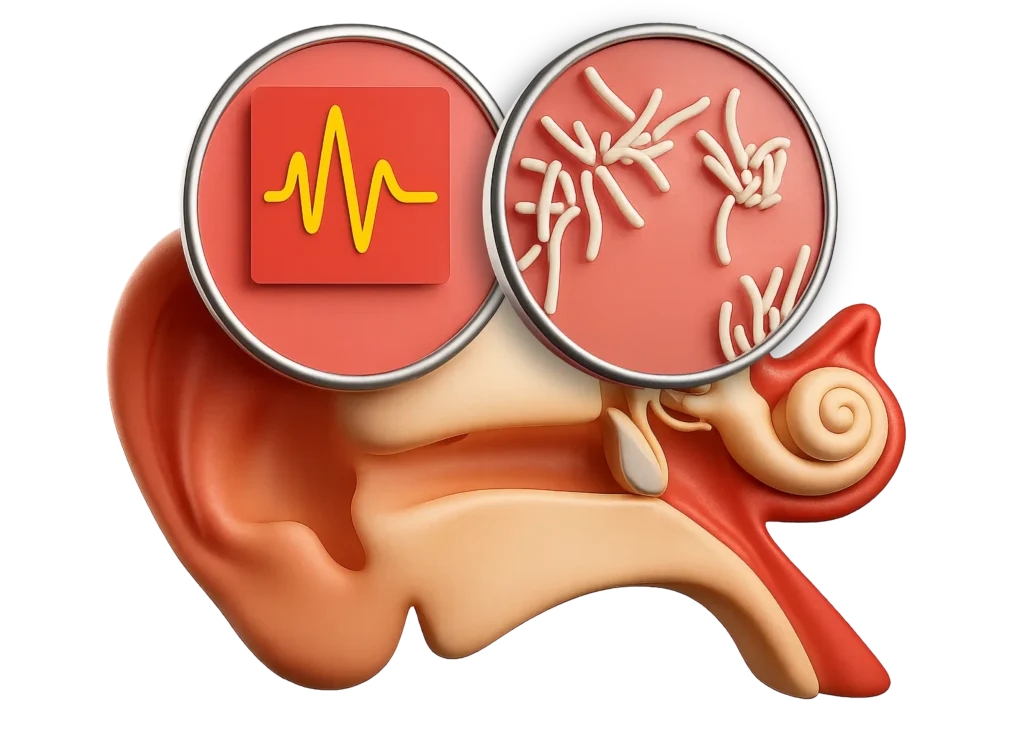
Simply put, mixed hearing loss happens when there’s an issue in two different areas of your auditory system: both the outer or middle ear (the “conductive” part) and the inner ear or auditory nerve (the “sensorineural” part).
Think of it this way: One part may involve a physical barrier that limits how sound reaches the inner ear while the other affects how those sounds are processed once they arrive. Together, these two issues combine to reduce how clearly and fully you hear.
Potential Causes:
Causes of mixed hearing loss vary wildly. Typically, the sensorineural hearing loss is already present, and the conductive hearing loss develops later and for an unrelated reason. Very rarely, a conductive hearing loss can cause a sensorineural hearing loss. As with sensorineural and conductive hearing losses, only a thorough diagnostic hearing and medical evaluation can identify a specific cause.
Treatment Options:
Medication or surgery may be the answer to the conductive portion of the mixed hearing loss, but these interventions cannot treat the sensorineural portion of the hearing loss. Many people who suffer from a mixed hearing loss will receive medical treatment for the conductive hearing but will have to use a hearing aids to treat the remaining sensorineural component of their hearing loss. Mild to severe sensorineural hearing loss can be helped through the use of hearing aids.
Frequently Asked Questions
Got questions?
We’ve got answers and we’re standing by to help.