
Your Child’s Hearing Journey: Expert Care in the Rogue Valley
Watching your child discover the world around them is a true delight. If you’ve observed signs that their hearing might not be as clear as it could be, you’re not alone. At Audiology Associates of Southern Oregon, a local, family-owned practice that has been a trusted part of this community for nearly 40 years, we’re dedicated to nurturing your child’s potential for strong hearing, confident communication, and joyful learning.
Why Early Hearing Support Makes All the Difference
Hearing is fundamental to how children learn, connect, and thrive. It’s the cornerstone of language development, academic success, and building social confidence. When hearing challenges go unnoticed, it can affect speech clarity, classroom engagement, and overall self-assurance.
Our experience shows that children who receive timely hearing care are more likely to develop stronger language skills and perform better academically. We’re here to walk alongside you, ensuring your child receives the comprehensive support they need to flourish.
Understanding Your Child’s Hearing Landscape
Childhood hearing loss is rarely one-size-fits-all. It can manifest in different ways, and we’re here to help you understand what might be happening:
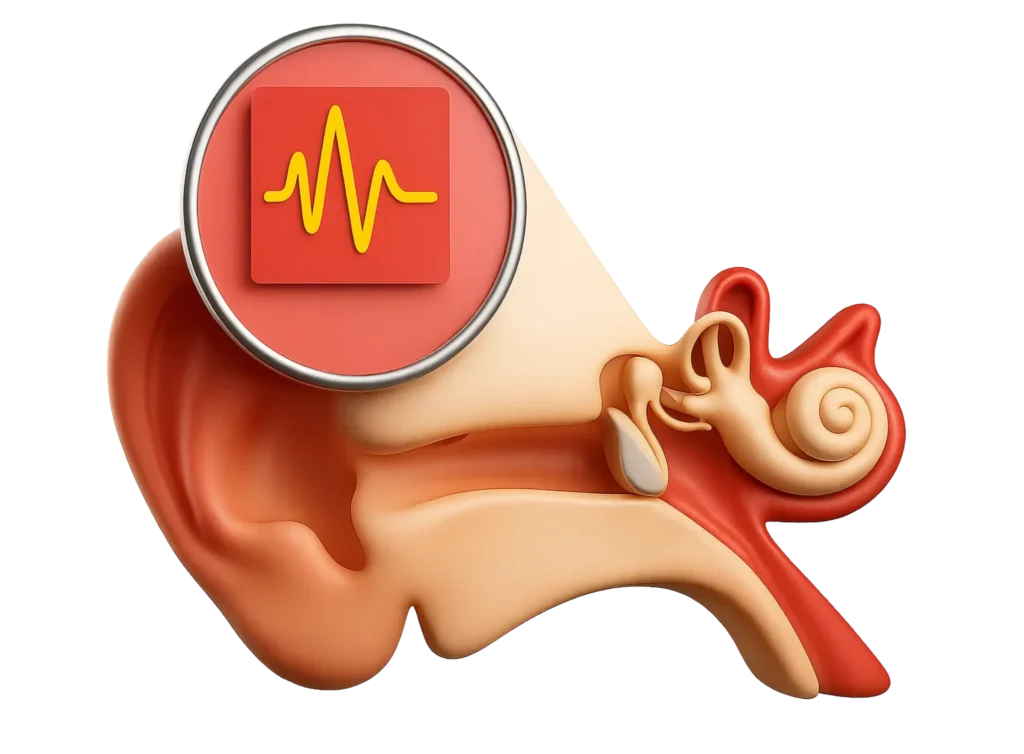
Conductive Hearing Loss
This occurs when sound waves are blocked in the outer or middle ear – often due to common issues like fluid buildup from ear infections.
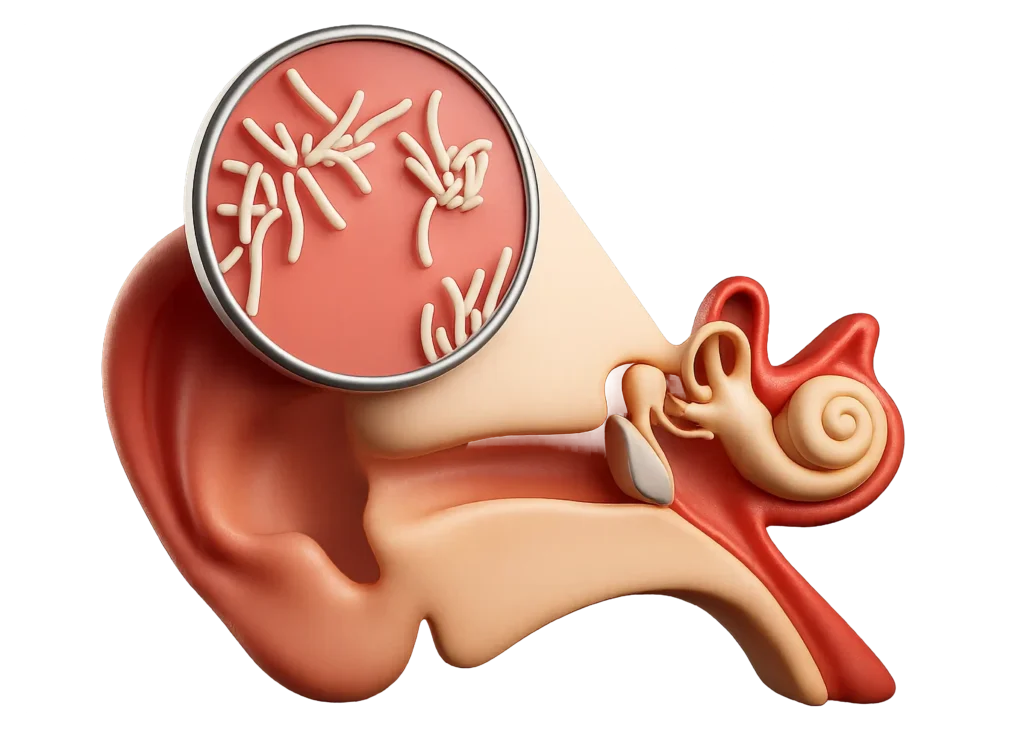

Every child’s journey is distinct. Our role is to carefully assess the specific type, extent, and impact of any hearing challenge on your child’s ability to hear and develop language, guiding you through each step.
What Observations Might Suggest a Hearing Challenge?
Children often don’t express when they’re having difficulty hearing. As a parent or caregiver, you’re their keenest observer. Here are some common signs to watch for:
In Newborns & Infants
Communication begins the moment they arrive. Delays in these early milestones can be a signal.
- Regarding hearing and understanding:
- Doesn’t startle at sudden, loud sounds.
- Doesn’t seem to recognize your voice.
- Doesn’t turn their eyes towards a sound source.
- Regarding speech development:
- Limited or no babbling.
- Cries sound similar regardless of their need.
- Doesn’t vocalize excitement or displeasure.
- By 12-15 months, hasn’t spoken a word or two
In Toddlers
As they grow, communication challenges may become more noticeable.
- Regarding hearing and understanding:
- Struggles to follow simple directions like pointing to body parts.
- Doesn’t engage when read to.
- Doesn’t grasp action words like “run” or “sit.”
- Needs to sit very close to the television.
- Regarding speech development:
- Difficulty forming simple sentences.
- Doesn’t ask “Why?” or “What?” questions.
- Struggles to answer “Why?” or “What?” questions.
- Doesn’t use plurals or verbs consistently.
In Young Adults & Teens
This age group may face a higher risk of noise-induced hearing changes. Without proper hearing protection during concerts, headphone use, or activities like hunting, hearing can be affected. Look for signs such as:
- Turning up TV or music volume excessively.
- Frequently asking “What?” or “Huh?”
- Only responding when you have their eye contact.
- Complaining of ringing in their ears (tinnitus) or a noticeable dip in hearing.
- Withdrawing from social situations.


Navigating Treatment: Our Partnership With Your Family
As your trusted guides, we believe in a family-centered approach to care. We’ll develop a clear, evidence-based plan that’s specifically designed for your child’s unique hearing profile and communication aspirations.
Empowering Your Child’s Hearing Journey at Home
Effective hearing care truly flourishes when it’s integrated into daily life. We’ll be your steady companion, guiding both you and your child through practical strategies:
Common Questions, Clear Answers
Ready to Take the Next Step?
If you have any questions about your child’s hearing, or if you simply feel it’s time for a routine checkup, please don’t hesitate to reach out. Our friendly team at Audiology Associates of Southern Oregon, serving Grants Pass, Medford, and Ashland, is here to welcome you. Book your appointment today.