
What Is Conductive Hearing Loss?
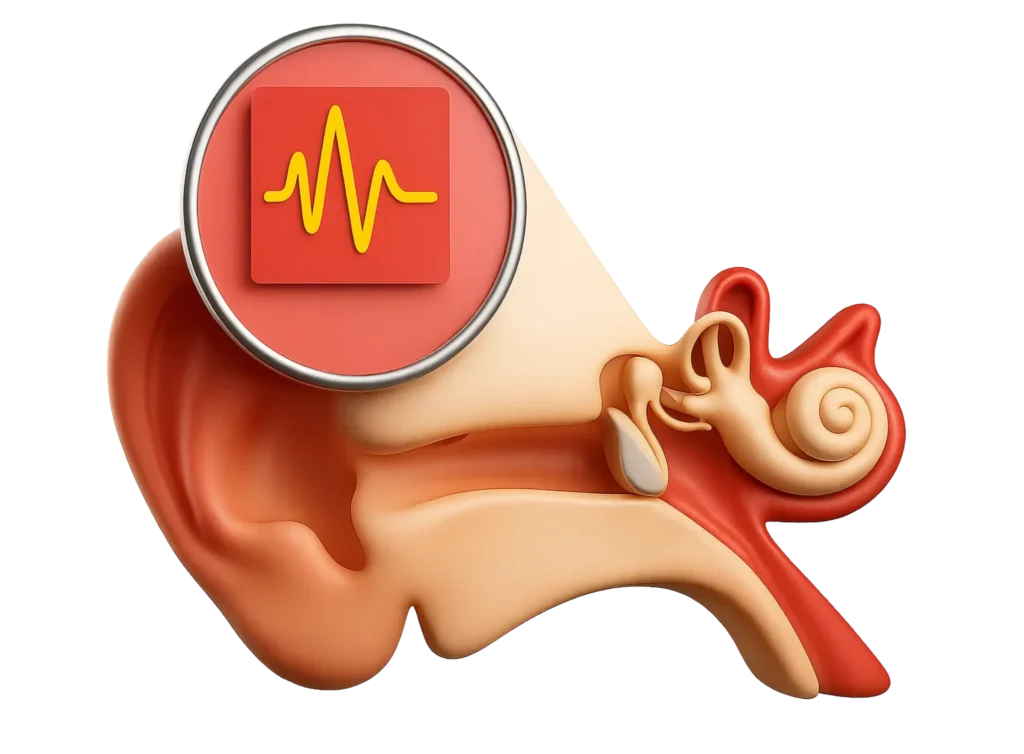
Imagine sound embarking on a journey: It enters your outer ear, travels through the middle ear, and then reaches the inner ear where it’s transformed into signals your brain understands. Conductive hearing loss occurs when something creates a barrier or interruption along this initial path.
It’s like having a beautiful view from your window, except it’s a little smudged — the scenery’s there but not quite as sharp. The sound source itself is often healthy, but the message gets muffled. This is distinct from sensorineural hearing loss, which involves the inner ear or auditory nerve. The significant difference with conductive hearing loss is its frequent reversibility and responsiveness to care.
Potential Causes:
There are many potential causes of conductive hearing loss, with some causes being easier to treat than others. Malformation of the outer- or middle-ear structures, a middle-ear infection in which fluid accumulates behind the eardrum, abnormal bone growth in the middle ear, a hole in the eardrum, or poor eustachian tube function may be responsible for conductive hearing loss. Rarely, there may be more serious causes of conductive hearing loss, and these conditions, if left unidentified and untreated, may have profound medical consequences.
Treatment Options:
Treatment for conductive hearing loss varies based on the circumstances. Antibiotics or antifungal medications are usually prescribed for ear infections, whereas surgery is usually an option for malformed or abnormal outer- or middle-ear structures and other physical problems. Hearing aids are often the best answer when surgery is not possible, because they significantly improve hearing and are convenient. Though usually not necessary, implantable hearing devices such as a bone-anchored hearing aid are an excellent alternative if neither surgery nor a traditional hearing aid are feasible options.
Frequently Asked Questions
Got questions?
We’ve got answers and we’re standing by to help.